I want to grow my own: tomatoes, beans, courgettes. I wonder if the soil is rich enough.
PerenOS translates into function Food yield & soil fertility · summer vegetable bed
PerenOS is the ecological design software for climate-adaptive landscapes. It generates plant communities adapted to the specific conditions of a site and the climate it is moving into.
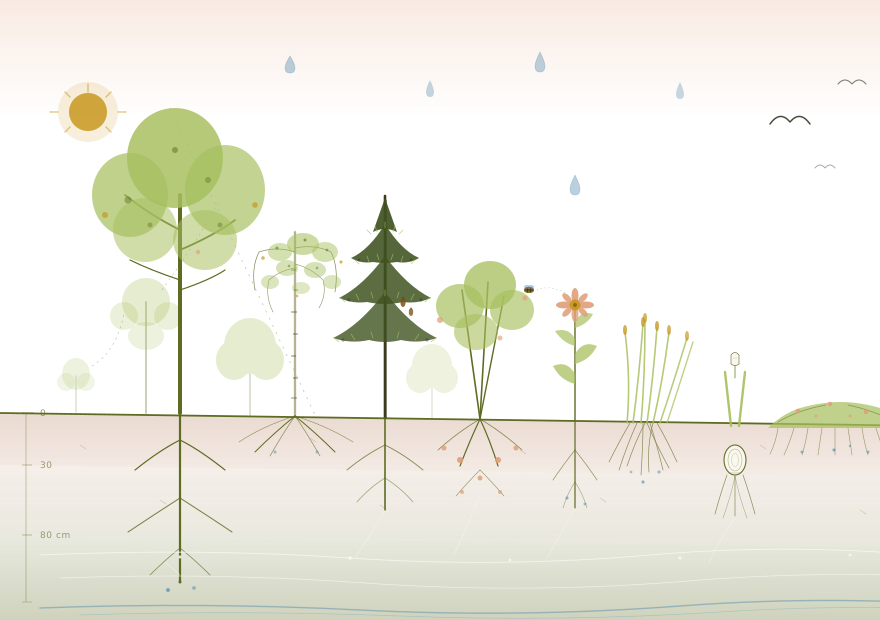
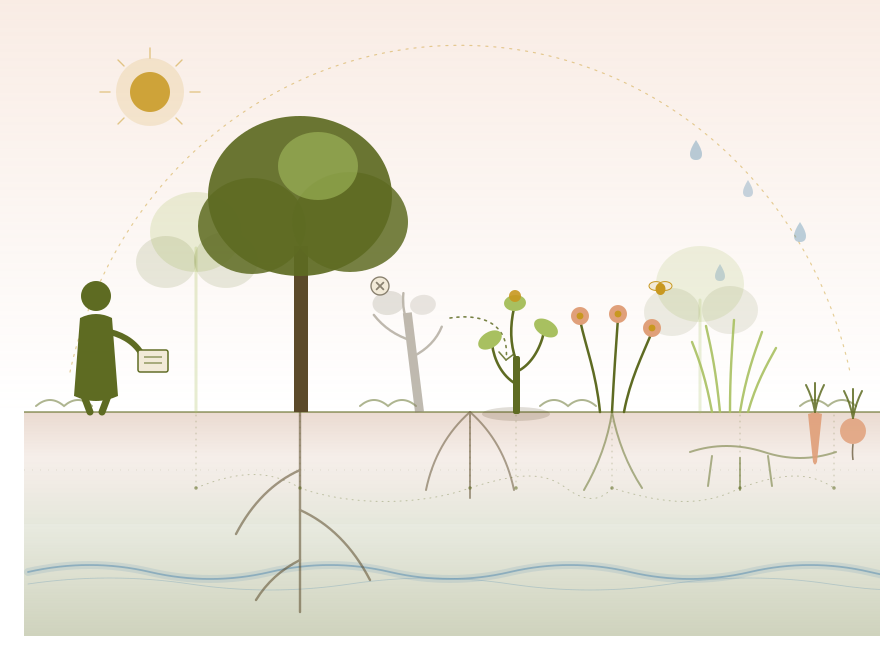
The brief PerenOS reasons against. Each function names what the project must perform; together they constrain the community search space.
The brief, in your words. PerenOS listens to what you said and reads each as a function the land needs to perform.
Biodiversity net gain
Delivered across all 4 communities
Drought resilience
Delivered by Calcareous scrub edge
Pollinator habitat
Delivered by Upland neutral grassland
Slope & runoff stability
Delivered by Mesic chalk turf
Winter water retention
Delivered by Wet meadow grassland
CSRD / TNFD reportability
Delivered across all 4 communities
I want to grow my own: tomatoes, beans, courgettes. I wonder if the soil is rich enough.
PerenOS translates into function Food yield & soil fertility · summer vegetable bed
Last summer's heat killed the south border. I'm not sure what would survive next time.
PerenOS translates into function Drought resilience · the border that died
The bees come to the lavender. I'd like more places for them, ideally pretty ones.
PerenOS translates into function Pollinator forage & ornament · front-of-house beds
We want fruit. Old varieties if possible: apple, pear, fig. The almond if it can take the climate.
PerenOS translates into function Fruit provision & canopy · traditional + new-species orchard
The hedge feels empty in winter. I'd like it to shelter the birds, and screen the road in summer.
PerenOS translates into function Habitat & shelter · mixed native hedgerow
I don't want to spend my weekends watering. What can survive without me?
PerenOS translates into function Low-input establishment · whole garden
Each named function is a hard constraint. PerenOS proposes communities that satisfy all of them or refuses, with the conflict named.
PerenOS proposes one community per functional zone. Each is reasoned from the diagnosis and the brief.
PerenOS proposes one community per place. Each is reasoned from your land's conditions and the function asked of it.
4 communities · all HIGH confidence 5 communities · all matched to a placePollinator forage
Upland neutral grassland
Confidence High
Wet stability
Wet meadow grassland
Confidence High
Drought-tolerant scrub
Calcareous scrub edge
Confidence High
Slope & runoff
Mesic chalk turf
Confidence High
Food yield
Summer vegetable bed
Confidence High
Pollinator forage
Front-of-house flower beds
Confidence High
Fruit provision
Traditional + new-species orchard
Confidence High
Hedgerow shelter
Mixed native hedgerow
Confidence High
Drought resilience
The border that died in the heatwave
Confidence High
Every output carries the chain of reasoning that produced it: the diagnostic values it used, the functions it satisfies, the bounded uncertainty it accepts.
Site ecological report
Narrative · 28 pp
Planting schedule
Spec + drawing · 4 zones
Monitoring plan
5-year cadence + calendar
Species list
Provenance-tagged · machine-readable
Regulatory & compliance
PerenOS sets an observation rhythm: what to look at, when, and what each observation tells it. After handover, PerenOS stays with the land through every season.
Photograph each place
One frame per bed, same spot, same time of day. PerenOS reads coverage, gaps, pressures.
Visual baselineNote what's flowering
Pollinator forage check. Peak window for the front-of-house and the hedgerow.
Function checkDrought response of the dry border
If the border wilts again, PerenOS proposes a substitution and explains why the original community was insufficient.
AdaptHarvest tally · year-1 establishment
Veg bed yield + orchard set. Feeds back into next year's planting schedule.
RecordEvery observation feeds the model's reasoning for next season.
PerenOS removes time pressure at specification stage by saving hours per project on:
that are produced upstream or downstream of spatial decisions.
Species selections are grounded in documented scientific and functional reasoning.
Where multi-year maintenance obligations apply, that documentation becomes the defensible decision.
PerenOS generates traceable community proposals calibrated to projected 2030–2060 conditions, structured for biodiversity net gain submissions, CSRD disclosure, TNFD reporting, and planning authority review.
Ecological signal
Regulatory response
Operate across these periods as continuous financial and planning disclosure obligations.